
Deforestation free
No forest was cleared or degraded on the plot after 31 December 2020.
EUDR
From 30 December 2026, coffee, cacao, wood, rubber, cattle, soy and palm oil sold in the EU, and products made from them, must come from land that was not deforested after 31 December 2020, and must be produced legally. Here is what that means for you, whether you produce, process or bring it into Europe.
I manage land I buy and import
General information, not legal advice.
No forest was cleared or degraded on the plot after 31 December 2020.
The product was produced under the laws of the country it comes from: land rights, environment, labour, tax and trade.
Every lot can be traced back to the plots it came from, with the location of each plot.
This applies to every product covered, from the raw crop to products made from it, such as chocolate, furniture and paper.
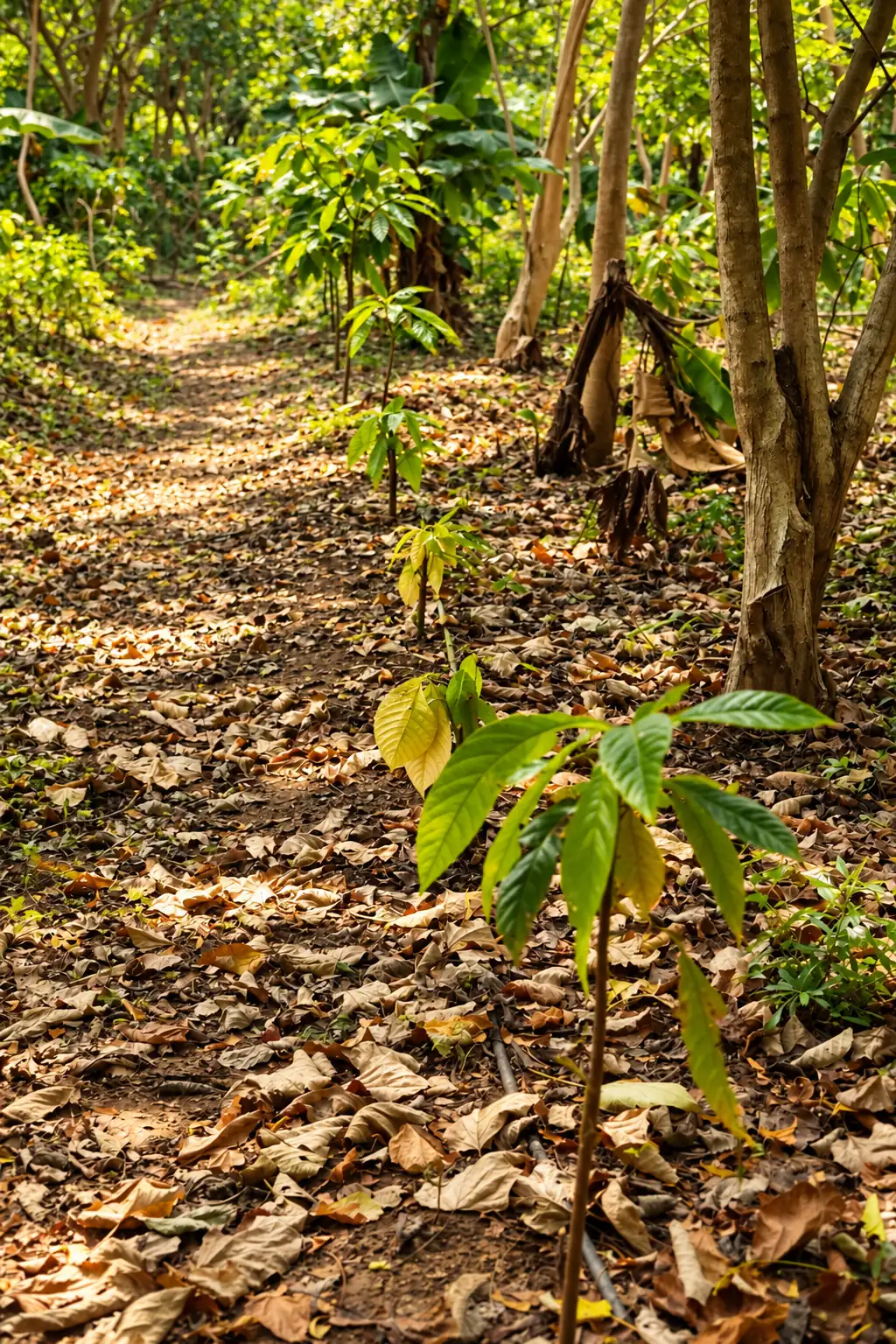
If you sell to a buyer, a processor or an exporter, you file nothing in the EU. But your buyer cannot comply without your data, so it will become a condition of buying: where each plot is, proof that no forest was cleared after 2020, and documents that show the land and the farm are legal.
A processor or exporter that sells to a company in the EU, such as a chocolate factory or a sawmill, has no direct duty under the EUDR, but it does most of the practical work: collecting the data from farms and forests, keeping traced products apart from untraced, and passing the full package on with each lot.
The first company in the EU to place the product on the market is responsible. It checks the evidence, files a due diligence statement in the EU system before the goods enter, and keeps the evidence for five years.
Companies that buy inside the EU keep the reference numbers of the statements filed before them. They do not repeat the work.
Behind these four lines is a long list of details, and buyers reject lots when one is missing. In a first conversation we go through the full list with you and show you what you already have and what is missing.
The EU places every country in one of three risk groups. The group decides how much the company in the EU must check, and it follows the country where the product was grown, not where it was sold.
Full due diligence on every lot. The buyer collects the information, assesses the risk and reduces it before buying.
Simplified due diligence. Plot locations and legality evidence are still required. A full risk assessment is only needed if there are warning signs.
The strictest checks by EU authorities.
Standard risk14
Low risk5
Standard risk15
Low risk10
Standard risk3
Low risk12
High risk1
Source: Commission Implementing Regulation (EU) 2025/1093. Countries not listed by the EU are standard risk. Checked: 15 October 2026. Full EU list for all countries
What does your country's risk group mean for your plots and your buyers? That depends on your products, your buyers and the evidence you already have.
Large and medium companies.
Micro and small companies.
The cut off date. Forest cleared after this date disqualifies the plot.
No. Only the company that places the product on the EU market, or exports it from the EU, files a statement. But your buyer will ask you for plot locations and proof that no forest was cleared, because the company in the EU needs them.
Yes. Low risk means fewer checks for the buyer, not less data. Plot locations and legality evidence are always needed.
Yes, if your products end up in the EU. Small companies in the EU get until 30 June 2027, but your buyer may need your data already for the harvest that arrives in 2027. Talk to your buyer about when, and talk to us about how.
It depends on the size of the plot, and many buyers ask for more than the minimum. We map the boundary of every plot, so the question does not come up.
Among other things, forest near your plots, the history of each plot since 2020, the land rights and how many steps there are between the farm and the EU. Which evidence lowers the risk for your plots is what we work out with you.
Not on its own. Certification can support the evidence, but the buyer still needs the location of each plot and proof for each plot.
Not what comes from that plot. Products from your other plots can still be sold, as long as they are kept separate. Mixing them with products of unknown origin breaks the chain for the whole lot.
No. We do not certify products as compliant. We provide the evidence for each plot: maps, satellite checks, field verification and documents, so the company that files the statement can rely on it.
THE EUDR PRODUCT
A single check of every plot behind your products: located on a map, checked by satellite against 31 December 2020, with land documents reviewed and every gap named. You know where you stand before your buyer or the authorities ask. It shows your status today. It is not a certificate of compliance.
A file per plot, ready for your buyer, and a list of what is still missing.
The status of every plot behind your suppliers, with the data your due diligence statement needs.
One fee, fixed scope. Checking every shipment as it leaves is part of our ongoing service.
Every farm and every supply chain is different. In a first conversation we look at your plots or your suppliers, what your buyers need and what is missing, and you leave with a clear next step.
We map every plot, check it against 2020 by satellite, put the documents in order and hand you a file per lot, ready for your buyer. The data stays yours.
Evidence for each plot behind each lot, ready for your due diligence statement, and monitoring that warns you if something changes.
General information, not legal advice.